
Showing posts with label concept. Show all posts
Showing posts with label concept. Show all posts
Thursday, April 16, 2015

The USMC's P-19R ARFF vehicle programme seeks to provide marines with superior off-road capability, speed and transportability to better respond to an entire range of firefighting missions in future.
Awarded in May 2013, the P-19R contract has a performance period that runs up to 2018 and aims to replace the 1984 deployed P-19A fleet, which is nearing the end of its service life.
Since then, Oshkosh has successfully completed all necessary government development testing and evaluation and readiness reviews to achieve Milestone C approval and low rate initial production (LRIP) contract.
Oshkosh Defense, defence programmes senior vice-president John Bryant said: "The Oshkosh P-19R is backed by our company's unique combination of industry leading off-road military vehicle and ARFF expertise, providing marines with the latest innovative technology whether they're at a military base or an expeditionary airfield.
"Consistent with our strong track record of delivering programmes on-schedule and on-budget, we're proud to deliver the new P-19R capabilities and safety that marines need for future fire-emergency missions."
The P-19R vehicle is equipped with Oshkosh's TAK-4 independent suspension system, Command Zone, an integrated control and diagnostics system, and advanced Striker firefighting systems.

Oshkosh's TAK-4 independent suspension system provides the payload capacity needed to carry 1,000 gallons of water, 130 gallons of foam agent, and 500lb of Halotron auxiliary firefighting agent.
The fully-automated Command Zone system allows marines to repair and troubleshoot vehicles, view real-time performance data and remotely access diagnostics information.
Oshkosh will start delivering the first LRIP vehicles to support production verification testing (PVT) in November.

Embraer and Saab today have signed an agreement that establishes a partnership for joint management of the F-X2 Project for the Brazilian Air Force following the Memorandum of Understanding announced on July 11th, 2014. The partnership agreement is part of Saab’s commitment to deliver industrial co-operation in relation to the F-X2 project. Under this agreement, Embraer will have a leading role in the overall performance of the programme. Embraer will also undertake an extensive share of work in the production and delivery of both the single and two-seat versions of the Gripen NG, Brazil’s next-generation fighter jet.
Embraer will be responsible for extensive work packages in systems development, integration, flight test, final assembly and aircraft deliveries. Embraer will also participate in the coordination of all development and production activities in Brazil. Furthermore, Embraer and Saab will be jointly responsible for the complete development of the two-seat version of the Gripen NG. Beginning in the second half of 2015, a team of Embraer engineers and technicians will be based in Sweden to conduct initial training in the maintenance and development work for the Gripen NG. This skill and competence will subsequently be transferred to Brazil. Embraer and Saab will build an Engineering Centre at Embraer's industrial plant in Gavião Peixoto, in the state of São Paulo, to support operations of the Gripen NG fighters with the Brazilian Air Force.
“With this agreement, Embraer and Saab establish a long-term partnership on a strategic project for Brazil and for the Brazilian Air Force,” says Jackson Schneider, president and CEO of Embraer Defense & Security. “The Gripen NG will raise the operational standard of our Air Force and enable it, with the appropriate means, to fulfill its primary mission, which is the defense of our territory.”
“Through this partnership we will secure an excellent result for the Brazilian Air Force and we will establish solid ground for success with future business opportunities and customers. Not only do we share experience in the defense and aeronautical markets, but both organisations have a clear dedication to customer satisfaction that validates Gripen as the most capable and modern fighter system on the market”, says Lennart Sindahl, Deputy CEO at Saab.
“The Brazilian Air Force sees with great enthusiasm this additional incentive to the Brazilian industry, through the companies of the defense sector. This new strategic partnership confirms that we are building a promising future. The defense industry needs to be increasingly strengthened as it is one of the main drivers of scientific and technological development of our country”, said Aeronautics Commander, Air Force Brigadier General Nivaldo Luiz Rossato.
The implementation of the partnership for joint programme management between Saab and Embraer is subject to the F-X2 contracts between Saab and COMAER (Brazilian Air Force Command) becoming effective. The contract between Saab and COMAER for Gripen NG and the associated industrial co-operation contract will come into effect once certain conditions have been fulfilled. These conditions are expected to be fulfilled during the first half of 2015.
The Gripen NG is a true multi-role fighter aircraft, based on the proven Gripen C/D platform. It is built to adapt to all of the changing threats and operational requirements currently faced by modern air forces. Gripen’s combination of very advanced operational capabilities with moderate through-life costs make the fighter absolutely unique on the world market.
Wednesday, April 15, 2015

Featuring a live video feed with military grade encryption, the Mariner 600 is ideally suited to difficult searches of inland waterways, under trees, riverbanks and quarries.
Designed to the same high specifications as their previous vehicles and aimed at the cost conscious buyer, the Mariner 600 is compatible with existing Search Systems ground stations and mobile command units, making it a low cost upgrade to existing unmanned assets or an excellent entry to the market with dual aerial and aquatic capability.
Utilising a multirotor flight control system with surface thrusters for driving on water, the Mariner 600 is the ideal vehicle for working over water or shallow searches. Working alongside a dive team, the UAV-ROV crossover provides pre-dive information on inaccessible points, potential entanglements and an aerial view of the search area.
Michael Thompson, Sales Director of Search Systems: “As a former diver, the benefit of an instant aerial view is fantastic but the ability to fly into tight spaces, reach the bottom of riverbanks or sheer quarry cliffs takes UAV assistance to a whole new level. Our early underwater footage was excellent and now with the Mariner able to manoeuvre on the surface, any UAV operator can fly and drive the Mariner with ease.”
The Mariner 600 includes an Electro Optical camera as standard with thermal available as an upgrade.
Tuesday, April 14, 2015

In December last year, Brodosplit won a contract to supply five coastal patrol boats for the Croatian coast guard. The 41.85-meter boats will be fitted with the 30 mm automatic machine guns, two manually-operated 12.7 mm machine guns and four manually-operated portable anti-aircraft rocket systems.
The ASELSAN Stabilized Gun Platforms, which can be mounted on either stationary or mobile platforms, are designed for purposes of coastal defense, border defense and defense of naval platforms against asymmetric threats. By its stabilized structure, remote operability feature, automated target detection function, and firing accuracy, the system can be recommended for all combat purposes. 7,62mm, 12,7mm machines guns and 40mm grenade launcher can be integrated to Aselsan turret.
Based on experience and knowledge obtained from existing members of the family, 12.7mm STAMP and 25mm STOP Systems, SMASH System has been developed in less than 2 years.
SMASH is a Remote Controlled Naval Gun System fitted with a 30 mm gun integrated on a stabilized pedestal with independent Electro-Optic Sight and surveillance mode (without aiming with the gun). The system has excellent tracking and firing ability with a very high hit accuracy. It can be fed via two separate ammunition lines selected by the operator, using the remote operating panel.
Dual feed 30mm automatic cannon installed on SMASH System is capable of firing 200 rounds per minute.
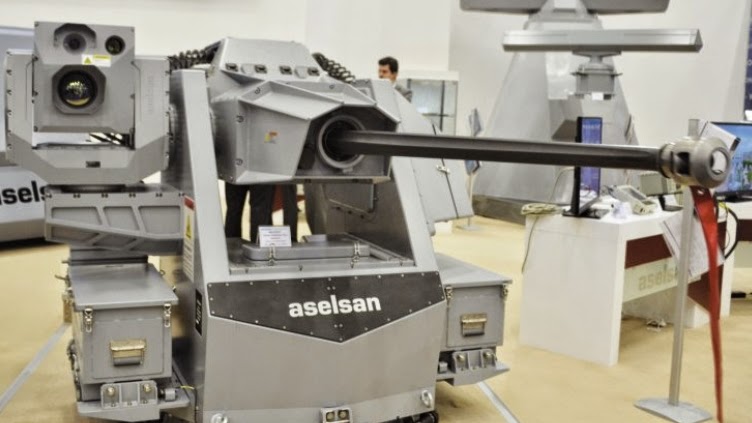
As opposed to fixed sight systems used on STAMP and STOP Systems, High Accuracy Stabilized Gimbal (HASG) which can rotate in elevation and azimuth axes relative to turret is integrated to SMASH System.
HASG ensures effective firing at long distances by enabling electro-optic units (Thermal Imager, Day Camera and Laser Range Finder) stay on the target at all times, even during the firing where ballistic correction is applied to the gun. Furthermore, surveillance without aiming gun to the target and video tracking are possible with HASG integration.
Thursday, April 09, 2015

If the tests are successful, the F-3 will represent a breakthrough for Japan in terms of stealth capabilities and high-powered engine technology, the report said. The advanced fifth-generation fighter, which originates from Japan’s advanced technology demonstrator-experimental (ATD-X) program, has been designed to deliver superior performance in the four major quality indicators of stealth, supersonic cruise capability, maneuverability and integrated avionics systems.
In terms of stealth technology, the F-3’s exterior is said to contain absorbing materials that can reduce radar reflection. Apart from evading radar detection, the aircraft also aims to eliminate visible light signals, electronic signals, heat and noise in order to minimize detectability.
The cruise capability of the F-3 will rely on its 15-ton-level high-powered engine co-developed by Japan’s IHI Corporation and the Technical Research and Development Institute of the country’s Ministry of Defense. The engine will reportedly feature XF5-1 low-bypass turbofan technology and composite ceramic materials highly resistant to heat.
Ordinarily, fighter jets need to make a compromise between stealth and maneuverability, but the F-3’s design is said to be able to resolve the conflict. The jet has been designed to be light and multi-purpose, with diamond-shaped wings with no empennage. It has also borrowed advantageous designs from other American fighter jets, with an intake ramp similar to that of the X-32 and a Y-shaped tail that resembles the YF-23.
The F-3’s avionics system integrates a high-performance active phased array radar, electronic warfare systems and multi-function RF sensors, with fiber cables to enable high mobility control and improved radar technology to expand the detection area and distance.
Despite its impressive design, the F-3 still faces many practical obstacles before it can become a reality, the PLA Daily said. Researchers are still exploring engine capabilities and need to figure out problems such as compressors and burners for such a high-powered engine. The fact that engines in the older F-2, which are less powerful than those in the F-3, have malfunctioned during flights, with reports of strong vibrations during high speeds, demonstrates that Japan’s engine technology is not sufficiently mature, the PLA Daily added.

Additionally, Japan’s fighter materials technology has reached a bottleneck. The US F-15, for instance, has a titanium proportion as high as 26.5%, but it is not practical for Japan to simply copy the Americans as the former is completely reliant on imports for such raw materials.
The development of the F-3 carries significant strategic meaning for Japan, the PLA Daily said. On the one hand, the aircraft is viewed upon as a return to form for Japan’s aviation industry and represents a show of strength against China, especially given Tokyo’s efforts to lift its constitutional prohibition against collective self-defense. On the other, a successful F-3 program shows that Japan can stand on its own in developing a superior fighter. Japan has been over-reliant on the US in developing fighter jets in the past, rendering its own technologies lagging. America’s guarded attitude towards Japan has led to the US suspending cooperation on multiple occasions, so the F-3 could end up being a bargaining chip in future negotiations.


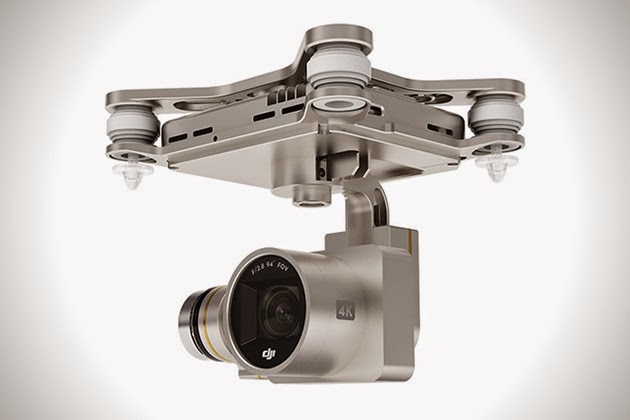
Both drones can be controlled by the included remote along with the smartphone/tablet app, letting you pilot your drone with your mobile device. It also comes equipped with GPS, ensuring you never lose your robot friend, and built-in sensors that provide real-time battery life. Our favorite feature though has to be the “follow me” function, letting you the drone autonomously follow you while you run around. The Advanced starts at $1,000, while the Professional is a bit more pricey at $1,250.



Tuesday, April 07, 2015

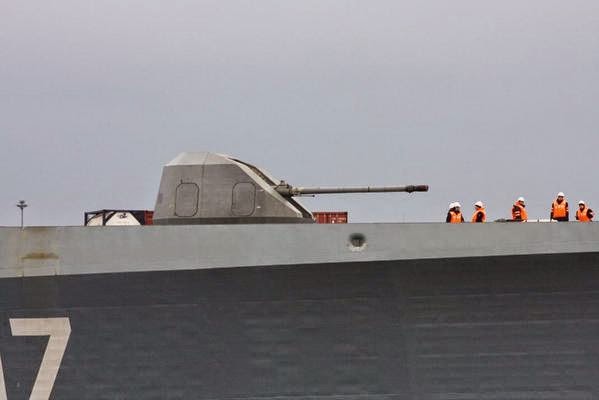
The first phase of the sea trials focused on the navigation performance of the new vessel. Key elements such as the propulsion, steering gear, auxiliary machinery, communication, detection and navigation equipment, anchor gear etc. were thoroughly tested.
"While the ship is in St. Petersburg, at Severnaya Verf, it is being prepared for the second phase of tests at sea to be conducted on the northern ranges," - a spokesman said, without specifying the date when the new Frigate will head to the Barents Sea.
He noted that the ship will be delivered to the Russian Navy Fleet this year as planned initially.
Some Russian media previously reported about problems in the power plant of the frigate. The shipyard dismissed these reports and said there were "no problems" with the power plant. "The ship pefromed well in the initial tests, the sailors and crew are very happy. This is a completely new design and its tests are carried out very carefully," - said the representative of the shipyard.
The first ship of the class "Admiral Gorshkov" was laid in February 2006 and launched in October 2010. There are currently 3 other frigates of the class under construction at the St Petersburg shipyard: "Fleet Admiral Kasatonov" laid down in November 2009, "Admiral Golovko" laid down in February 2012 and "Admiral of the Fleet of the Soviet Union Isakov" laid down in November 2013.
General characteristics of Project 22350
Full load Displacement: 4500 tons :
Length: 135 meters
Beam: 16.4 meters
Draft: 4,5 meters
Speed (knots): 29
Range: 4500 nm @ 14 knots
The class is fitted with the following weapons:
2x8 VLS 3S14U1 (guided missile complex «Kalibr-NK», anti-ship missile complex 3K55 «Onyx» (anti-ship missile P-160 (3M55)))
4x8 VLS 3S97 SAM system 3K96 «Redut» (32 missiles 9M96) – Fire control system «Poliment»
1x 130 mm A-192M «Armat» – Fire control system 5P-10 «Puma»
2x automatic gun mount 3R99 «Palash» (2x6 30 mm)
2x 14,5 mm MTPU
2x6 330 mm torpedo tubes SM-588 anti-submarine system «Paket-A»




Monday, April 06, 2015

Russia is developing a series of unmanned aerial vehicles (UAVs). Active work in this area began in 2008, when the conflict with Georgia showed a need for reconnaissance and combat drones, and the Soviet Pchyola (Bee) and Reys (Flight) no longer met modern battlefield needs.
“This theme (of UAVs) must be developed,” said Ovanes Mikoyan, son of the famous creator of the Soviet MiG aircraft. “A pilot need not be always sent to the front line. It is enough to have an operator on the ground, who can fly a drone to the destination, and perform almost all the same tasks as a pilot, albeit a little worse than now, but with lower losses,” said Mikoyan, also an aircraft designer and adviser to the Structural Engineering Centre of the Mikoyan Design Bureau.
In Russia, according to Mikoyan, “all and sundry” are working on the development of drones, with the Mikoyan Design Bureau having its own projects as well.
“We have lots of ideas at the Design Bureau. The important thing is that the state provides support. Then the future will not be only in the company that bears my father’s name, but in the overall Russian aviation industry,” said Mikoyan.
It is worth noting that the MiG Design Bureau, together with Klimov OJSC, presented the concept of a full-sized model of a stealth jet-powered UAV – the Skat, back in 2007, during the MAKS-2007 Air show. Despite its promising features, (maximum takeoff weight of 10 tons, and practical range of 4000 m), stealth, and consequently ultramodern appearance (vaguely reminiscent of the American carrier-based UAV X-47B, it was first presented to the public in 2008) this program was soon cancelled.
Instead, in July 2012, the “overpowering” Sukhoi was officially declared the developer of a heavy UAV, with a take-off weight of 10 to 20 tons, after a closed tender floated by the Ministry of Defence.
In October 2012, the companies Sukhoi and MiG (both design bureaus being part of the United Aircraft Corporation, led then by Sukhoi’s Mikhail Pogosyan) signed a cooperation agreement for the development of UAVs. Thus, the MiG will be taking part in this project, the tender for which was earlier won by Sukhoi.
According to reports, the results of the collaboration may be ready by 2018.
Earlier, Pogosyan had announced that the future UAV would be using systems and solutions common to the fifth-generation fighter jet – the T-50.

Then, to assist the domestic defence industry, Russia purchased Israeli UAVs, the IAI Searcher Mk II and IAI Bird Eye 400, made in Russia from assembly kits called Forpost (Outpost) and Zastava (Frontier Post), respectively.
The Transas Company (St. Petersburg) and Sokol Design Bureau (Kazan) have been involved in the creation of long-endurance drones since 2011. Their work is continuing. Earlier this year, it became apparent that a prototype-demonstration UAV – the Altius-M (Altair) - would be test flown before the end of 2015.
The “Russian equivalent of the Predator” – the Dozor-600, which, according to combat performance characteristics, is similar to the American prototype, but since this data was unproven, the unit remains at an experimental stage.
Currently, in addition to the Israeli aircraft, the Russian Defence Ministry uses short-range UAVs – the Orlan-10 and the portable Grusha (Pear). Recent reports suggest that Russian paratroopers have been training with the portable UAV – the Iskatel (Seeker). There has, however, been no confirmation that these have entered service with the armed forces.
[Mir robotov]
Sunday, April 05, 2015

The companies anticipate the Army will field the sensor, meant to improve range and resolution, to upgrade FLIR in its ground vehicle fleet. The Army held an industry day at Fort Belvoir, Virginia, in February and is expected to kick off a competition with a request for proposals in May, followed by an engineering and manufacturing program and an award in the early 2020s.
Army Acquisition Executive Heidi Shyu, speaking at an industry conference in Washington on March 17, said the Army is ready to turn 16 years of research into a program of record and that the system is planned for Abrams tanks and Bradley infantry vehicles.
The improved system would, for instance, give troops the ability to discriminate between shovels and rifles at greater ranges than second generation FLIR, or between a tank and a commercial truck.
"The new 3rd Gen technology will dramatically improve the range performance of ground combat vehicle sensors, allowing greater standoff range and identification capability," Clay Towery, senior manager for business development at Raytheon, said Thursday. "It's very important to the Army, and it will provide a significant combat advantage and it's critical that we field this technology to maintain combat overmatch."

The current generation uses a linear scanned array, a line of detectors that optically sweeps across its field a view. Technological advances allow for staring focal plane arrays which, because they use many detectors on an image plane and don't sweep, absorb much more information. The other significant advance is its ability to see in two bands simultaneously, the long-wave and mid-wave bands.
"The Army and our team have a strong track record of delivering state-of-the-art next generation FLIR technology on our nation's premiere ground vehicle combat platforms," Sally Wallace, DRS C4ISR group president, said in a statement. "Our experience integrating a common FLIR across the Army's combat vehicle platforms is critical to synchronizing the Army's modernization strategy."

In the time it took Boeing and the US Marines to develop and put into service the Osprey tilt-rotor helicopter, Italy's AgustaWestland has lingered over development of its own, smaller tilt-rotor, prompting questions about the fate of the program.
Initially developed in partnership with Bell, the AW609 has racked up test flights and turned into an all-Italian program after the US firm went its separate way.
But now, there's new interestin the aircraft by the Italian Navy and Army as both look to tilt-rotors to boost capabilities.
Strategy documents issued in recent months by the Army and Navy listed tilt-rotors as high on their shopping lists, just as AgustaWestland announces a series of planned upgrades for the AW609.
On March 3, the Italian firm said it was planning to increase maximum takeoff weight to 18,000 pounds thanks to engine upgrades, landing gear modifications and better flight control techniques. In short, the firm said, the AW609 would now be able to fly 500 nautical miles in two hours carrying nine passengers.
The firm also said it was working on placing extra fuel tanks under the wings to boost maximum range to 1,100 nautical miles, or allow an 800-nautical-mile flight with six passengers in just over three hours.
The cabin door is also being enlarged to help the AW609 qualify for a search-and-rescue role, and a Rockwell Collins Pro Line Fusion flight deck is being added. AgustaWestland said it was aiming for FAA civil certification in 2017.
The firm sees the AW609 as ideal for oil and gas rig flights, and on March 19, Mauro Moretti, the CEO of parent company Finmeccanica, said the aircraft would prompt a "revolution" in the market.
"It is a way to obtain capabilities that the Navy has been denied due to its small size," said one official.
"With a tilt-rotor, you have an increase in the projection of troops and material, as well as an increase in the sustainability of vessels at sea, giving a small Navy operational possibilities it would not have otherwise," said the official. "It's the piece of a jigsaw we have never had."
Thanks to its range, speed and altitude, a tilt-rotor could provide other capabilities a shipborne helicopter could not, the official added.
"One possibility is as an early warning platform, which could see farther than a helicopter thanks to its higher altitude," he said. "Or as a refueling platform for STOVL joint strike fighters."
Navy officials have looked at the AW609 as well as the Osprey, with Marine Ospreys making landings on the Italian carrier Cavour.
"Companies are now looking at how to solve the problem of hot exhaust from tilt-rotors damaging flight decks," he said. "One solution they are considering is way to use gearing to allow the engine to remain fixed as the rotor changes position. Then the exhaust can be directed behind the tilt-rotor at all times."

The document goes on to describe the planned development of a family of tilt-rotors for dual use ranging from eight to 14 tons. "A first aircraft of eight tonnes for six passengers would allow the rapid transport of personnel and material, host an aerial command post," and carry out medical evacuations, the document said.
"The tilt-rotor in the lightweight configuration would be able to extend dramatically the range and speed available for liaison, medevac and command post missions," said an official.
An Army tilt-rotor might add a chin-mounted machine gun for self-defense and a targeting radar, he added.
Given the common interest by the Army and Navy, the Army official said that shared development of requirements could be considered.


The two companies, under a strategic partnership, also plan to manufacture an armored variant of Sand-X's T-ATV 1200.
"We are delighted to collaborate with Sand-X Motors; the vehicle is a truly unique and exciting product, said Guerman Goutorov, chairman of Streit Group, which is headquarted in the United Arab Emirates. "Our vision has always been to be a world leader in the security market by providing our customers with the latest advanced engineering & technology adapted to the security & defense market.
"With our newly extended production and training facilities in UAE we are not only be able to meet production volumes but also will be able to provide a range of specifically designed training courses for the armored and unarmored Sand-X T-ATV together with our extended range of APC's and MRAP courses."
Sand-X is a Swiss company with an operation in the UAE. It says the ATV features a Rotax four-stroke, fuel-injected engine and can reach a speed of 115 mph.
"We are pleased to work in partnership and R&D cooperation with Streit Group," said Urs Eiselin, chief executive officer of Sand–X. "Their extensive experience within the international security and defense market will be the best ambassador and technology partner for Sand-X Motors and allow us to achieve continued success"


Subscribe to:
Posts (Atom)


