Thursday, April 09, 2015
The highly anticipated F-3, Japan’s first domestically-made stealth jet, is aiming to conduct test flights this summer, reports the PLA Daily, a China-based media outlet for the People’s Liberation Army.
If the tests are successful, the F-3 will represent a breakthrough for Japan in terms of stealth capabilities and high-powered engine technology, the report said. The advanced fifth-generation fighter, which originates from Japan’s advanced technology demonstrator-experimental (ATD-X) program, has been designed to deliver superior performance in the four major quality indicators of stealth, supersonic cruise capability, maneuverability and integrated avionics systems.
In terms of stealth technology, the F-3’s exterior is said to contain absorbing materials that can reduce radar reflection. Apart from evading radar detection, the aircraft also aims to eliminate visible light signals, electronic signals, heat and noise in order to minimize detectability.
The cruise capability of the F-3 will rely on its 15-ton-level high-powered engine co-developed by Japan’s IHI Corporation and the Technical Research and Development Institute of the country’s Ministry of Defense. The engine will reportedly feature XF5-1 low-bypass turbofan technology and composite ceramic materials highly resistant to heat.
Ordinarily, fighter jets need to make a compromise between stealth and maneuverability, but the F-3’s design is said to be able to resolve the conflict. The jet has been designed to be light and multi-purpose, with diamond-shaped wings with no empennage. It has also borrowed advantageous designs from other American fighter jets, with an intake ramp similar to that of the X-32 and a Y-shaped tail that resembles the YF-23.
The F-3’s avionics system integrates a high-performance active phased array radar, electronic warfare systems and multi-function RF sensors, with fiber cables to enable high mobility control and improved radar technology to expand the detection area and distance.
Despite its impressive design, the F-3 still faces many practical obstacles before it can become a reality, the PLA Daily said. Researchers are still exploring engine capabilities and need to figure out problems such as compressors and burners for such a high-powered engine. The fact that engines in the older F-2, which are less powerful than those in the F-3, have malfunctioned during flights, with reports of strong vibrations during high speeds, demonstrates that Japan’s engine technology is not sufficiently mature, the PLA Daily added.
The aircraft’s avionics system is also problematic because it is split into software and hardware, and Japan’s lack of experience dealing with complex air flows could make the system vulnerable to poor weather conditions. The hydraulics system is also believed to be a concern for a stealth jet designed to be so agile.
Additionally, Japan’s fighter materials technology has reached a bottleneck. The US F-15, for instance, has a titanium proportion as high as 26.5%, but it is not practical for Japan to simply copy the Americans as the former is completely reliant on imports for such raw materials.
The development of the F-3 carries significant strategic meaning for Japan, the PLA Daily said. On the one hand, the aircraft is viewed upon as a return to form for Japan’s aviation industry and represents a show of strength against China, especially given Tokyo’s efforts to lift its constitutional prohibition against collective self-defense. On the other, a successful F-3 program shows that Japan can stand on its own in developing a superior fighter. Japan has been over-reliant on the US in developing fighter jets in the past, rendering its own technologies lagging. America’s guarded attitude towards Japan has led to the US suspending cooperation on multiple occasions, so the F-3 could end up being a bargaining chip in future negotiations.
If the tests are successful, the F-3 will represent a breakthrough for Japan in terms of stealth capabilities and high-powered engine technology, the report said. The advanced fifth-generation fighter, which originates from Japan’s advanced technology demonstrator-experimental (ATD-X) program, has been designed to deliver superior performance in the four major quality indicators of stealth, supersonic cruise capability, maneuverability and integrated avionics systems.
In terms of stealth technology, the F-3’s exterior is said to contain absorbing materials that can reduce radar reflection. Apart from evading radar detection, the aircraft also aims to eliminate visible light signals, electronic signals, heat and noise in order to minimize detectability.
The cruise capability of the F-3 will rely on its 15-ton-level high-powered engine co-developed by Japan’s IHI Corporation and the Technical Research and Development Institute of the country’s Ministry of Defense. The engine will reportedly feature XF5-1 low-bypass turbofan technology and composite ceramic materials highly resistant to heat.
Ordinarily, fighter jets need to make a compromise between stealth and maneuverability, but the F-3’s design is said to be able to resolve the conflict. The jet has been designed to be light and multi-purpose, with diamond-shaped wings with no empennage. It has also borrowed advantageous designs from other American fighter jets, with an intake ramp similar to that of the X-32 and a Y-shaped tail that resembles the YF-23.
The F-3’s avionics system integrates a high-performance active phased array radar, electronic warfare systems and multi-function RF sensors, with fiber cables to enable high mobility control and improved radar technology to expand the detection area and distance.
Despite its impressive design, the F-3 still faces many practical obstacles before it can become a reality, the PLA Daily said. Researchers are still exploring engine capabilities and need to figure out problems such as compressors and burners for such a high-powered engine. The fact that engines in the older F-2, which are less powerful than those in the F-3, have malfunctioned during flights, with reports of strong vibrations during high speeds, demonstrates that Japan’s engine technology is not sufficiently mature, the PLA Daily added.
The aircraft’s avionics system is also problematic because it is split into software and hardware, and Japan’s lack of experience dealing with complex air flows could make the system vulnerable to poor weather conditions. The hydraulics system is also believed to be a concern for a stealth jet designed to be so agile.
Additionally, Japan’s fighter materials technology has reached a bottleneck. The US F-15, for instance, has a titanium proportion as high as 26.5%, but it is not practical for Japan to simply copy the Americans as the former is completely reliant on imports for such raw materials.
The development of the F-3 carries significant strategic meaning for Japan, the PLA Daily said. On the one hand, the aircraft is viewed upon as a return to form for Japan’s aviation industry and represents a show of strength against China, especially given Tokyo’s efforts to lift its constitutional prohibition against collective self-defense. On the other, a successful F-3 program shows that Japan can stand on its own in developing a superior fighter. Japan has been over-reliant on the US in developing fighter jets in the past, rendering its own technologies lagging. America’s guarded attitude towards Japan has led to the US suspending cooperation on multiple occasions, so the F-3 could end up being a bargaining chip in future negotiations.
Russia is ready to supply its weapons to Thailand in exchange for agricultural output, Prime Minister Dmitry Medvedev said in an interview with Nation media group on Wednesday.
"If you take such decisions, we’ll naturally be pleased to supply such hardware to you, even considering that Thailand has traditionally worked with western suppliers," the Russian premier said in response to a question about the possibility of such exchanges.
Medvedev said Russian weapons are in no way inferior to armaments imported by Thailand.
"If necessary, we’ll do a lot, supplying both tanks and other types of armaments," the Russian premier said, adding Russia is one of the largest weaponry exporters and is not ashamed of this fact.
Most countries in the world will always and in any conditions have their own armies after all, the Russian premier said.
"In any case, there must be sufficient armed forces so that you can be treated with respect," Medvedev said.
When asked by a Thai journalist whether Russian weapons were cheaper than western armaments, Medvedev said: "Some types are surely cheaper."
"If you take such decisions, we’ll naturally be pleased to supply such hardware to you, even considering that Thailand has traditionally worked with western suppliers," the Russian premier said in response to a question about the possibility of such exchanges.
Medvedev said Russian weapons are in no way inferior to armaments imported by Thailand.
"If necessary, we’ll do a lot, supplying both tanks and other types of armaments," the Russian premier said, adding Russia is one of the largest weaponry exporters and is not ashamed of this fact.
Most countries in the world will always and in any conditions have their own armies after all, the Russian premier said.
"In any case, there must be sufficient armed forces so that you can be treated with respect," Medvedev said.
When asked by a Thai journalist whether Russian weapons were cheaper than western armaments, Medvedev said: "Some types are surely cheaper."
STX France announced the delivery of a new Offshore Patrol Vessel OPV 45 to Raidco Marine for the Senegalese Navy. The OPV is named Kedogou. The OPV 45 is a Raidco Marine design but it was built by STX France's shipyard of Lorient in Brittany.
Navy Recognition learned during Euronaval last year that Kedogou OPV 45 was launched in October 10, 2014. OPV 45 vessels are 45.6 m long and 8.4 m wide. It can be armed with a weapon system up to 40 mm. Two 6.2 m RHIB are also on board. Its hull is made of steel and the superstructure is in aluminum. There are 25 sailors aboard. The vessel has a steel hull and aluminium superstructure. It is powered by two Cummins diesel engines (1 940 kW) providing a top speed of 22 knots. Endurance is ten days with a range of 2 000 nautical miles. It is able to launch two RHIBs via stern ramp.
Following the succesful sea trials, Kedogou should be fitted with a 20 mm gun and two 12.7 mm machineguns.
The Senegalese Navy will use this new OPV for maritime security and anti-piracy missions.
Navy Recognition learned during Euronaval last year that Kedogou OPV 45 was launched in October 10, 2014. OPV 45 vessels are 45.6 m long and 8.4 m wide. It can be armed with a weapon system up to 40 mm. Two 6.2 m RHIB are also on board. Its hull is made of steel and the superstructure is in aluminum. There are 25 sailors aboard. The vessel has a steel hull and aluminium superstructure. It is powered by two Cummins diesel engines (1 940 kW) providing a top speed of 22 knots. Endurance is ten days with a range of 2 000 nautical miles. It is able to launch two RHIBs via stern ramp.
Following the succesful sea trials, Kedogou should be fitted with a 20 mm gun and two 12.7 mm machineguns.
The Senegalese Navy will use this new OPV for maritime security and anti-piracy missions.
This high performance 2-wheeler was inspired by the AMG GT, and sports a gorgeous yellow and black paint job atop a lightweight frame. The bike is outfitted with carbon fiber handle bars, multi-shift functionality and a set of Formula AMG R1 Racing FCS disc brakes for optimum braking power. The 29-inch carbon fiber wheels wrapped in Continental Race King tires round things out. Production will be extremely limited, with only 100 total units hitting the scene. Each one will start retailing at roughly $11,000.
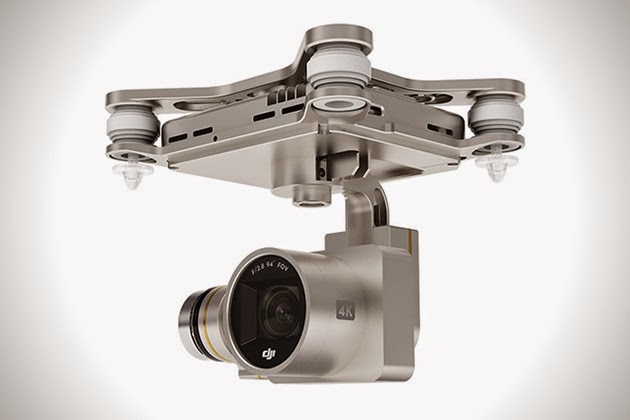
As the name would indicate, the main selling point here is the ability to shoot 4K footage (at 30 FPS). There will be both a Phantom 3 Professional and Phantom 3 Advance available – the Professional being the one with the 4K ability. While the Professional doesn’t quite live up the Advanced, it’s not too shabby either, shooting at 1920 x 1080 at 60 FPS.
Both drones can be controlled by the included remote along with the smartphone/tablet app, letting you pilot your drone with your mobile device. It also comes equipped with GPS, ensuring you never lose your robot friend, and built-in sensors that provide real-time battery life. Our favorite feature though has to be the “follow me” function, letting you the drone autonomously follow you while you run around. The Advanced starts at $1,000, while the Professional is a bit more pricey at $1,250.
Wednesday, April 08, 2015
The much awaited test of an updated version of India’s most potent Advanced Air Defence (AAD) interceptor missile from a defence test facility off the Odisha coast on Monday turned out to be a fiasco with the weapon system falling immediately after taking off from the launcher.
The indigenously built missile, dubbed as ‘Ashwin’ was fired from the launching complex – IV of the Wheeler Island at about 11.45 am and it was to intercept an electronic target within an altitude of below 20 km as simulated by the mission team to gauge the efficiency and killing precision of the improved version of the killer missile.
Reliable sources at the test range told ‘The New Indian Express’ that the missile nose-dived within a couple of seconds after it took off from the mobile launcher. Though the missile caught fire which was later doused by the mission team, no major damage was reported.
Indigenously developed by the Defence Research and Development Organisation (DRDO), the AAD interceptor missile is a single-stage missile powered by solid propellants. It is 7.5 metres tall and weighs around 1.2 tonnes. It has a diameter of less than 0.5 metres and the capability to kill incoming enemy missiles fired from 1,000 away.
Although exact reason behind the ‘failure’ was yet to be known as the defence scientists were busy analysing data, DRDO officials were tight-lipped about the test. Director of Integrated Test Range (ITR) MVKV Prasad and Director of DRDO’s Directorate of Public Interface Ravi Kumar Gupta did not respond to the calls from ‘The Express’.
Contacted, Director of Directorate of Public Relations (DPR) N Ao said the Ministry of Defence (MoD) is yet to get any information about the test result. “We have not got any official information from the DRDO which is supposed to intimate us regarding the outcome of the test fire. We are waiting for the information,” he told ‘The Express’ over phone from New Delhi.
However, it was not the first failure of AAD interceptor. The missile had failed to hit the target missile directly during its test on July 26, 2010. Unfortunately the interceptor, which traveled only about 15 km, got itself detonated before reaching the target and had fallen apart.
Later the target missile was destroyed by the mission team with help of the destruction button. Of the seven tests of AAD so far, five have been successful. A similar planned test of AAD was put-off twice in mid-March 2010 and the mission was aborted due to some technical snags in the sub-system of the missile. But this fiasco turned out to be more embarrassing for the DRDO as the missile fell immediately after takeoff at a time when the country is planning to deploy the anti ballistic missile (ABM) defence shield in New Delhi within a year or two to safeguard the capital city from hostile attacks.
Meanwhile, sources said two Long Range Tracking Radars (LRTRs) jointly developed by the DRDO and an Israeli company having ranges of around 1,000 kms have been positioned in New Delhi and they are being integrated into the surveillance network of Indian Air Force (IAF).
India has a Ballistic Missile Defence (BMD) system capable of tracking and destroying hostile missiles in both endo-atmospheric (below an altitude of 30 km) and exo-atmospheric (above an altitude of 80 km) region. However, the AAD test was aimed at developing a full-fledged multi-layer BMD system.
This missile is considered as similar to the American PAC-3 system in terms of range and altitude of interception. It is a solid rocket propelled guided missile equipped with an inertial navigation system, a hi-tech computer and an electro-mechanical activator totally under command by the data up-linked from the ground based radar.
The indigenously built missile, dubbed as ‘Ashwin’ was fired from the launching complex – IV of the Wheeler Island at about 11.45 am and it was to intercept an electronic target within an altitude of below 20 km as simulated by the mission team to gauge the efficiency and killing precision of the improved version of the killer missile.
Reliable sources at the test range told ‘The New Indian Express’ that the missile nose-dived within a couple of seconds after it took off from the mobile launcher. Though the missile caught fire which was later doused by the mission team, no major damage was reported.
Indigenously developed by the Defence Research and Development Organisation (DRDO), the AAD interceptor missile is a single-stage missile powered by solid propellants. It is 7.5 metres tall and weighs around 1.2 tonnes. It has a diameter of less than 0.5 metres and the capability to kill incoming enemy missiles fired from 1,000 away.
Although exact reason behind the ‘failure’ was yet to be known as the defence scientists were busy analysing data, DRDO officials were tight-lipped about the test. Director of Integrated Test Range (ITR) MVKV Prasad and Director of DRDO’s Directorate of Public Interface Ravi Kumar Gupta did not respond to the calls from ‘The Express’.
Contacted, Director of Directorate of Public Relations (DPR) N Ao said the Ministry of Defence (MoD) is yet to get any information about the test result. “We have not got any official information from the DRDO which is supposed to intimate us regarding the outcome of the test fire. We are waiting for the information,” he told ‘The Express’ over phone from New Delhi.
However, it was not the first failure of AAD interceptor. The missile had failed to hit the target missile directly during its test on July 26, 2010. Unfortunately the interceptor, which traveled only about 15 km, got itself detonated before reaching the target and had fallen apart.
Later the target missile was destroyed by the mission team with help of the destruction button. Of the seven tests of AAD so far, five have been successful. A similar planned test of AAD was put-off twice in mid-March 2010 and the mission was aborted due to some technical snags in the sub-system of the missile. But this fiasco turned out to be more embarrassing for the DRDO as the missile fell immediately after takeoff at a time when the country is planning to deploy the anti ballistic missile (ABM) defence shield in New Delhi within a year or two to safeguard the capital city from hostile attacks.
Meanwhile, sources said two Long Range Tracking Radars (LRTRs) jointly developed by the DRDO and an Israeli company having ranges of around 1,000 kms have been positioned in New Delhi and they are being integrated into the surveillance network of Indian Air Force (IAF).
India has a Ballistic Missile Defence (BMD) system capable of tracking and destroying hostile missiles in both endo-atmospheric (below an altitude of 30 km) and exo-atmospheric (above an altitude of 80 km) region. However, the AAD test was aimed at developing a full-fledged multi-layer BMD system.
This missile is considered as similar to the American PAC-3 system in terms of range and altitude of interception. It is a solid rocket propelled guided missile equipped with an inertial navigation system, a hi-tech computer and an electro-mechanical activator totally under command by the data up-linked from the ground based radar.
The crash of three military aircraft in late February and early March have prompted Turkey’s defense procurement officials to accelerate their efforts to choose a conceptual trainer aircraft, a program that should progress in tandem with a plan to build an indigenous Turkish fighter jet.
Turkish officials said the twin crashes were a forceful reminder of a pressing need “to go faster” in selecting a fighter aircraft model based on which Turkey would also build a trainer.
“The new trainer will be constructed to cater for the chosen fighter model,” one senior official said. “The top [defense procurement] management is aware of a need to go faster with both programs. They will go with a ‘priority’ tag.”
Turkey is looking for a commercially available fighter model to build its indigenous program on. It will then build an aircraft to train its pilots for the TX-F, the Turkish fighter.
Military rules out technical problems
Military officials say that ideally by 2017, the Turkish trainer fleet will comprise screeners, the Korean-made KT-1, the Turkish-made Hürkuş, the upgraded T-38 (T-38T) and the F-16. By 2025, the trainer fleet will have the screeners, the Hürkuş, the indigenous trainer designed and developed for the fighter Turkey intends to build, the TF-X, and a combination of the F-16s, TF-Xs and F-35s.
Two Turkish RF-4E reconnaissance jets crashed into a hill on Feb. 27 near Malatya, eastern Turkey, killing all four pilots aboard. On March 5, an F-4E fighter crashed over an electronic warfare test field near Konya in Central Anatolia, killing the two pilots aboard.
The Turkish military ruled out technical reasons for both mishaps. A statement from the military headquarters March 10 blamed the accidents on piloting errors. Although the military denied technical failures about the aircraft, it said March 11 that it would decommission the remaining eight RF-4E aircraft in the Air Force’s inventory by March 12.
To augment its trainer aircraft fleet, Turkey has signed a deal with Turkish Aerospace Industries (TAI) to buy 10 Hürkuş trainers, but is also pushing for a follow-on order from Korean Aerospace Industries for 15 KT-1s in an approximately $150 million deal. In 2007, Turkey and Korea Aerospace Industries (KAI) signed a contract for the sale of an initial batch of 40 KT-1s, with an option for 15 more. Aviation experts say the Turkish military is not comfortable about the Hürkuş’s delivery schedule, targeted for 2017-2018.
Turkish officials said the twin crashes were a forceful reminder of a pressing need “to go faster” in selecting a fighter aircraft model based on which Turkey would also build a trainer.
“The new trainer will be constructed to cater for the chosen fighter model,” one senior official said. “The top [defense procurement] management is aware of a need to go faster with both programs. They will go with a ‘priority’ tag.”
Turkey is looking for a commercially available fighter model to build its indigenous program on. It will then build an aircraft to train its pilots for the TX-F, the Turkish fighter.
Military rules out technical problems
Military officials say that ideally by 2017, the Turkish trainer fleet will comprise screeners, the Korean-made KT-1, the Turkish-made Hürkuş, the upgraded T-38 (T-38T) and the F-16. By 2025, the trainer fleet will have the screeners, the Hürkuş, the indigenous trainer designed and developed for the fighter Turkey intends to build, the TF-X, and a combination of the F-16s, TF-Xs and F-35s.
Two Turkish RF-4E reconnaissance jets crashed into a hill on Feb. 27 near Malatya, eastern Turkey, killing all four pilots aboard. On March 5, an F-4E fighter crashed over an electronic warfare test field near Konya in Central Anatolia, killing the two pilots aboard.
The Turkish military ruled out technical reasons for both mishaps. A statement from the military headquarters March 10 blamed the accidents on piloting errors. Although the military denied technical failures about the aircraft, it said March 11 that it would decommission the remaining eight RF-4E aircraft in the Air Force’s inventory by March 12.
To augment its trainer aircraft fleet, Turkey has signed a deal with Turkish Aerospace Industries (TAI) to buy 10 Hürkuş trainers, but is also pushing for a follow-on order from Korean Aerospace Industries for 15 KT-1s in an approximately $150 million deal. In 2007, Turkey and Korea Aerospace Industries (KAI) signed a contract for the sale of an initial batch of 40 KT-1s, with an option for 15 more. Aviation experts say the Turkish military is not comfortable about the Hürkuş’s delivery schedule, targeted for 2017-2018.
Israel’s newest state-of-the-art submarine, the INS Tanin (pronounced ta-NEEN), which arrived in the country towards the end of last year, is nearly ready to begin its service.
In the past few months, since it arrived from Germany where it was built, the INS Tanin has been equipped with Israeli weapons, communications and intelligence systems. It is the largest submarine in Israel’s fleet, measuring 68 meters (223 feet) in length.
This allows the sub to be fitted with special fuel tanks which enable the sub to move noiselessly and remain submerged longer than other submarines.
The INS Tanin is an air-independent propulsion (AIP) class vessel, the first in Israel’s fleet. Like its two sister ships, the Rahav, set to arrive later this year and an as-yet-unnamed vessel coming in 2018 or 2019, the Tanin can submerge for extended periods and carry long-range torpedoes.
Tanin’s commander (whose name is classified, but who was identified as Lt. Col. G) told Israel Hayom, “The number of missions we need to carry out is greater than our capability because of the shortage of submarines. We train the best fighters in the most professional way, because the smallest mistake by a crew member can at best cause a mission to fail and at worst allow the sub to be discovered and become vulnerable.”
Meanwhile, Haifa Naval Base commander Col. David Salma said that “[Israel’s] submarine fleet operates deep in enemy territory — secretly, efficiently, and lethally.”
In the past few months, since it arrived from Germany where it was built, the INS Tanin has been equipped with Israeli weapons, communications and intelligence systems. It is the largest submarine in Israel’s fleet, measuring 68 meters (223 feet) in length.
This allows the sub to be fitted with special fuel tanks which enable the sub to move noiselessly and remain submerged longer than other submarines.
The INS Tanin is an air-independent propulsion (AIP) class vessel, the first in Israel’s fleet. Like its two sister ships, the Rahav, set to arrive later this year and an as-yet-unnamed vessel coming in 2018 or 2019, the Tanin can submerge for extended periods and carry long-range torpedoes.
Tanin’s commander (whose name is classified, but who was identified as Lt. Col. G) told Israel Hayom, “The number of missions we need to carry out is greater than our capability because of the shortage of submarines. We train the best fighters in the most professional way, because the smallest mistake by a crew member can at best cause a mission to fail and at worst allow the sub to be discovered and become vulnerable.”
Meanwhile, Haifa Naval Base commander Col. David Salma said that “[Israel’s] submarine fleet operates deep in enemy territory — secretly, efficiently, and lethally.”
Two weeks ago, Japan commissioned its largest naval vessel since the end of World War II. Sleek and with the clean lines of a ship designed for stealth, JS Izumo pulled into Yokosuka Naval Base, her new home port, and officially joined the Maritime Self Defense Force.
Izumo is a sign of the times, a weapons system that pushes the boundaries of Japan's war-adverse culture and increasing tensions with China.
Officially, she's a "helicopter destroyer" — a destroyer designed to carry helicopters. But Izumo is no ordinary destroyer. Destroyers are not 800 feet long nor do they displace 24,000 tons. They also don't have a flight deck that runs the entire length of the ship, aircraft hangars, and the capability to embark up to 14 helicopters.
Izumo is what most countries — particularly China — would call an aircraft carrier.
Japan at the start of World War II had the greatest aircraft carrier force in the world. A fleet of six carriers attacked the U.S. Pacific Fleet at Pearl Harbor, altering the balance of power and convincing the world that the days of the battleship were over. By the end of the war most of Japan's carriers were at the bottom of the ocean, and the Asian nation vowed never to produce offensive weapons ever again, aircraft carriers in particular.
Japan says Izumo's mission is to hunt submarines and mines with helicopters, which are able to search the ocean faster and more safely than ships. Izumo also has a disaster relief mission: In the aftermath of the March 2011 earthquake, American aircraft carriers were invaluable, providing a floating helicopter base when those on the ground had been destroyed by the earthquake and tsunami.
What alarms some of Japan's neighbors — China in particular — is that the ships are also capable of carrying the American Joint Strike Fighter. The F-35B, designed to take off and land vertically for the U.S. Marine Corps, is an ideal fit for the Izumo class. Izumos could likely embark up to eight or nine of the stealthy, fifth generation strike fighters.
For decades, Japan has explicitly banned possession of aircraft carriers and marine infantry as tools of expeditionary, aggressive warfare. Izumo's stated role — and a second ship of the class will enter service in 2017 — is in line with Japan's vow not to make war on other countries but still preserve the capability for self-defense.
Now however, with China laying claim to the Japanese-held Senkaku Islands, and even inhabited islands such as Okinawa, Japan is raising a unit of marines with the idea that they are "defensive" and would be used to garrison — or liberate — territory from an enemy.
The same justification could be used for an aircraft carrier. Japanese fighter planes scrambled 400 times in just one year to intercept Chinese planes nearing their territory. Japan has a limited number of air bases capable of supporting the Senkaku Islands, so a floating one would actually be pretty useful.
Modifying the Izumo to make it a true aircraft carrier is a decision that won't be taken lightly. It will be expensive: In addition to the cost of procuring up to a dozen fighters (the per-unit price of an F-35B is currently a whopping $116 million), her flight deck will need to be strengthened to cope with the massive amounts of heat the F-35B generates during takeoffs and landings. The cost could end up being near two billion dollars — as much as the ship itself.
Despite being the third largest economy, Japan doesn't have a lot of money to spend on defense. She is also deeply in debt, with a public debt approaching 230 percent of GDP. Any steps to match China's growing military power must be carefully considered.
In the end, the deciding factor which way the Izumo class goes will be China. If China continues to test Japan's airspace by flying fighters nearby, increases its holdings of modern, fifth generation fighters like the J-20 and J-31, then it will give the Japanese government all the justification it needs.
If not, converting Izumo and her yet-unnamed sister ship to full-fledged carriers will be a tough sell, particularly to the Japanese public.
Time will tell what direction Japan ultimately takes. If, 10 years from now, Izumo only has helicopters on her flight deck, the situation in East Asia will be relatively peaceful and optimistic. But if there are fighter planes on her deck, relations between Japan and China will have taken a darker — and more dangerous turn.
Izumo is a sign of the times, a weapons system that pushes the boundaries of Japan's war-adverse culture and increasing tensions with China.
Officially, she's a "helicopter destroyer" — a destroyer designed to carry helicopters. But Izumo is no ordinary destroyer. Destroyers are not 800 feet long nor do they displace 24,000 tons. They also don't have a flight deck that runs the entire length of the ship, aircraft hangars, and the capability to embark up to 14 helicopters.
Izumo is what most countries — particularly China — would call an aircraft carrier.
Japan at the start of World War II had the greatest aircraft carrier force in the world. A fleet of six carriers attacked the U.S. Pacific Fleet at Pearl Harbor, altering the balance of power and convincing the world that the days of the battleship were over. By the end of the war most of Japan's carriers were at the bottom of the ocean, and the Asian nation vowed never to produce offensive weapons ever again, aircraft carriers in particular.
Japan says Izumo's mission is to hunt submarines and mines with helicopters, which are able to search the ocean faster and more safely than ships. Izumo also has a disaster relief mission: In the aftermath of the March 2011 earthquake, American aircraft carriers were invaluable, providing a floating helicopter base when those on the ground had been destroyed by the earthquake and tsunami.
What alarms some of Japan's neighbors — China in particular — is that the ships are also capable of carrying the American Joint Strike Fighter. The F-35B, designed to take off and land vertically for the U.S. Marine Corps, is an ideal fit for the Izumo class. Izumos could likely embark up to eight or nine of the stealthy, fifth generation strike fighters.
For decades, Japan has explicitly banned possession of aircraft carriers and marine infantry as tools of expeditionary, aggressive warfare. Izumo's stated role — and a second ship of the class will enter service in 2017 — is in line with Japan's vow not to make war on other countries but still preserve the capability for self-defense.
Now however, with China laying claim to the Japanese-held Senkaku Islands, and even inhabited islands such as Okinawa, Japan is raising a unit of marines with the idea that they are "defensive" and would be used to garrison — or liberate — territory from an enemy.
The same justification could be used for an aircraft carrier. Japanese fighter planes scrambled 400 times in just one year to intercept Chinese planes nearing their territory. Japan has a limited number of air bases capable of supporting the Senkaku Islands, so a floating one would actually be pretty useful.
Modifying the Izumo to make it a true aircraft carrier is a decision that won't be taken lightly. It will be expensive: In addition to the cost of procuring up to a dozen fighters (the per-unit price of an F-35B is currently a whopping $116 million), her flight deck will need to be strengthened to cope with the massive amounts of heat the F-35B generates during takeoffs and landings. The cost could end up being near two billion dollars — as much as the ship itself.
Despite being the third largest economy, Japan doesn't have a lot of money to spend on defense. She is also deeply in debt, with a public debt approaching 230 percent of GDP. Any steps to match China's growing military power must be carefully considered.
In the end, the deciding factor which way the Izumo class goes will be China. If China continues to test Japan's airspace by flying fighters nearby, increases its holdings of modern, fifth generation fighters like the J-20 and J-31, then it will give the Japanese government all the justification it needs.
If not, converting Izumo and her yet-unnamed sister ship to full-fledged carriers will be a tough sell, particularly to the Japanese public.
Time will tell what direction Japan ultimately takes. If, 10 years from now, Izumo only has helicopters on her flight deck, the situation in East Asia will be relatively peaceful and optimistic. But if there are fighter planes on her deck, relations between Japan and China will have taken a darker — and more dangerous turn.
After integrating “smart” rocket launchers on MH-60S helicopters last year, the U.S. Navy is now equipping the MH-60R with the same modernized capability. The Navy delivered the Digital Rocket Launchers (DRLs) on March 25 as part of an Early Operational Capability (EOC). A Rapid Deployment Capability Team, comprised of employees from the H-60 Multi-Mission Helicopters (PMA-299) and the Direct Time and Sensitive Strike Weapons (PMA-242) program offices, was challenged to complete the project within 12 months after the MH-60S EOC.
“We reached EOC on our threshold aircraft, the MH-60S, last year, and this year we’re on time again for our objective platform, the MH-60R,” said Capt. Craig Grubb, program manager for PMA-299. “Ultimately, the capability was provided on schedule and under budget.”
Specifically, these rocket launchers will better enable the warfighter deal with threats posed by fast attack craft (FAC)/fast inshore attack craft (FIAC).
“The DRL enables the MH-60R to carry the Advanced Precision Kill Weapon System,” said D’Ann Morris, MH-60 Weapons integrated product team co-lead for PMA-299. “This allows for a greater number of precision guided munitions to be used against the threat during a single attack. So not only do we reduce the number of attacks needed to accomplish a given mission, but we decrease operational cost, increase warfighting effectiveness, and enhance crew safety.”
The success of the delivery was largely due to the coordination between the two programs. Working together they were able to overcome technical challenges to ensure timely integration on the aircraft.
“The power of NAVAIR is our people,” said Capt. Al Mousseau, program manager for PMA-242. “We’ve received very positive feedback from the fleet thus far. The product works, and it’s on time, thanks to the effort of our teams — that’s a success.”
Helicopter Maritime Strike Squadron (HSM) 71, onboard the USS John C. Stennis (CVN 74) will be the first MH-60R squadron to deploy with the DRL, with a plan to outfit all squadrons flying that variant by the end of fiscal 2018.
The DRL is currently deployed on MH-60S aircraft with Helicopter Sea Combat Squadron (HSC) 15.
“We reached EOC on our threshold aircraft, the MH-60S, last year, and this year we’re on time again for our objective platform, the MH-60R,” said Capt. Craig Grubb, program manager for PMA-299. “Ultimately, the capability was provided on schedule and under budget.”
Specifically, these rocket launchers will better enable the warfighter deal with threats posed by fast attack craft (FAC)/fast inshore attack craft (FIAC).
“The DRL enables the MH-60R to carry the Advanced Precision Kill Weapon System,” said D’Ann Morris, MH-60 Weapons integrated product team co-lead for PMA-299. “This allows for a greater number of precision guided munitions to be used against the threat during a single attack. So not only do we reduce the number of attacks needed to accomplish a given mission, but we decrease operational cost, increase warfighting effectiveness, and enhance crew safety.”
The success of the delivery was largely due to the coordination between the two programs. Working together they were able to overcome technical challenges to ensure timely integration on the aircraft.
“The power of NAVAIR is our people,” said Capt. Al Mousseau, program manager for PMA-242. “We’ve received very positive feedback from the fleet thus far. The product works, and it’s on time, thanks to the effort of our teams — that’s a success.”
Helicopter Maritime Strike Squadron (HSM) 71, onboard the USS John C. Stennis (CVN 74) will be the first MH-60R squadron to deploy with the DRL, with a plan to outfit all squadrons flying that variant by the end of fiscal 2018.
The DRL is currently deployed on MH-60S aircraft with Helicopter Sea Combat Squadron (HSC) 15.
According to Japanese newspaper "The Japan Times", Indonesian Defense Minister Ryamizard Ryacudu said Monday his government is considering the possibility of buying the US-2 amphibious aircraft from Japan.
“We feel (there’s a match) and we wish to buy. We’re still mulling (this), and if we already finish (the assessment) we will report to the president about this,” Ryacudu said in an interview.
ShinMaywa is the prime manufacturer of the world's only amphibian aircraft capable of open-sea landing and takeoff. According to ShinMaywa: Remarkable capabilities of our US-1A and US-2 STOL Search and Rescue Amphibians enable the Japanese Maritime Self-Defense Force to transport emergency patients from outlying islands and rescue victims of disasters at sea.
Indonesian Navy already evaluated the Aron littoral combat WIG craft two years ago. According to various sources, Indonesia is also evaluating the procurement of Be-200 multipurpose amphibious aircraft from Russia.
“We feel (there’s a match) and we wish to buy. We’re still mulling (this), and if we already finish (the assessment) we will report to the president about this,” Ryacudu said in an interview.
ShinMaywa is the prime manufacturer of the world's only amphibian aircraft capable of open-sea landing and takeoff. According to ShinMaywa: Remarkable capabilities of our US-1A and US-2 STOL Search and Rescue Amphibians enable the Japanese Maritime Self-Defense Force to transport emergency patients from outlying islands and rescue victims of disasters at sea.
Indonesian Navy already evaluated the Aron littoral combat WIG craft two years ago. According to various sources, Indonesia is also evaluating the procurement of Be-200 multipurpose amphibious aircraft from Russia.
Tuesday, April 07, 2015
According to Russian news agency TASS, quoting an industry source, the new generation project 22350 frigate "Admiral Gorshkov" (hull number 417) will continue its sea trials with the Russian Navy Northern Fleet in the Barents Sea. So far, the ship was mostly located in St. Petersburg (where it was assembled by Severnaya Verf shipyard) and conducted initial trials in the Gulf of Finland.
The first phase of the sea trials focused on the navigation performance of the new vessel. Key elements such as the propulsion, steering gear, auxiliary machinery, communication, detection and navigation equipment, anchor gear etc. were thoroughly tested.
"While the ship is in St. Petersburg, at Severnaya Verf, it is being prepared for the second phase of tests at sea to be conducted on the northern ranges," - a spokesman said, without specifying the date when the new Frigate will head to the Barents Sea.
He noted that the ship will be delivered to the Russian Navy Fleet this year as planned initially.
Some Russian media previously reported about problems in the power plant of the frigate. The shipyard dismissed these reports and said there were "no problems" with the power plant. "The ship pefromed well in the initial tests, the sailors and crew are very happy. This is a completely new design and its tests are carried out very carefully," - said the representative of the shipyard.
The first ship of the class "Admiral Gorshkov" was laid in February 2006 and launched in October 2010. There are currently 3 other frigates of the class under construction at the St Petersburg shipyard: "Fleet Admiral Kasatonov" laid down in November 2009, "Admiral Golovko" laid down in February 2012 and "Admiral of the Fleet of the Soviet Union Isakov" laid down in November 2013.
General characteristics of Project 22350
Full load Displacement: 4500 tons :
Length: 135 meters
Beam: 16.4 meters
Draft: 4,5 meters
Speed (knots): 29
Range: 4500 nm @ 14 knots
The class is fitted with the following weapons:
2x8 VLS 3S14U1 (guided missile complex «Kalibr-NK», anti-ship missile complex 3K55 «Onyx» (anti-ship missile P-160 (3M55)))
4x8 VLS 3S97 SAM system 3K96 «Redut» (32 missiles 9M96) – Fire control system «Poliment»
1x 130 mm A-192M «Armat» – Fire control system 5P-10 «Puma»
2x automatic gun mount 3R99 «Palash» (2x6 30 mm)
2x 14,5 mm MTPU
2x6 330 mm torpedo tubes SM-588 anti-submarine system «Paket-A»
The first phase of the sea trials focused on the navigation performance of the new vessel. Key elements such as the propulsion, steering gear, auxiliary machinery, communication, detection and navigation equipment, anchor gear etc. were thoroughly tested.
"While the ship is in St. Petersburg, at Severnaya Verf, it is being prepared for the second phase of tests at sea to be conducted on the northern ranges," - a spokesman said, without specifying the date when the new Frigate will head to the Barents Sea.
He noted that the ship will be delivered to the Russian Navy Fleet this year as planned initially.
Some Russian media previously reported about problems in the power plant of the frigate. The shipyard dismissed these reports and said there were "no problems" with the power plant. "The ship pefromed well in the initial tests, the sailors and crew are very happy. This is a completely new design and its tests are carried out very carefully," - said the representative of the shipyard.
The first ship of the class "Admiral Gorshkov" was laid in February 2006 and launched in October 2010. There are currently 3 other frigates of the class under construction at the St Petersburg shipyard: "Fleet Admiral Kasatonov" laid down in November 2009, "Admiral Golovko" laid down in February 2012 and "Admiral of the Fleet of the Soviet Union Isakov" laid down in November 2013.
General characteristics of Project 22350
Full load Displacement: 4500 tons :
Length: 135 meters
Beam: 16.4 meters
Draft: 4,5 meters
Speed (knots): 29
Range: 4500 nm @ 14 knots
The class is fitted with the following weapons:
2x8 VLS 3S14U1 (guided missile complex «Kalibr-NK», anti-ship missile complex 3K55 «Onyx» (anti-ship missile P-160 (3M55)))
4x8 VLS 3S97 SAM system 3K96 «Redut» (32 missiles 9M96) – Fire control system «Poliment»
1x 130 mm A-192M «Armat» – Fire control system 5P-10 «Puma»
2x automatic gun mount 3R99 «Palash» (2x6 30 mm)
2x 14,5 mm MTPU
2x6 330 mm torpedo tubes SM-588 anti-submarine system «Paket-A»
Swedish newspaper Dagens Industri reported over Easter that the Swedish Jas Gripen jet is a strong candidate for successor to the soon obsolete Finnish Hornet fighter jets. However, Defense Minister Carl Haglund emphasised that the various options have only been tentatively explored.
Dagens Industri this Easter resurrected conjecture that Swedish fighter jets may be used to replace outdated Finnish Hornets. The paper also claimed that the use of Gripens would facilitate Finnish-Swedish defense cooperation because the air force would be able to utilise other bases.
A deepening of defence cooperation between the two nations has strong support from both sides.
However, Defense Minister Carl Haglund threw cold water over such speculation, saying on Sunday that the issue is far from decided, and that it is subject to standard preliminary studies, which began last October.
“Swedish fighter jets don’t have special status when Finland ponders the Hornet’s successor,” Minister for Defence Carl Haglund responded to an e-mail to STT on Sunday.
"Part of normal preparations"
The Ministry of Defence, the Defence Command and Air Force representatives have joined forces to conduct a broad foundational study, which will be completed at the end of May.
The new government will begin a feasibility study after the actual procurement preparations are made this year. The final procurement decision should be made in the early 2020s, meaning that the it will be made by the next government’s successor.
The new jet fighters would be manufactured and delivered between 2020-2030.
Dagens Industri this Easter resurrected conjecture that Swedish fighter jets may be used to replace outdated Finnish Hornets. The paper also claimed that the use of Gripens would facilitate Finnish-Swedish defense cooperation because the air force would be able to utilise other bases.
A deepening of defence cooperation between the two nations has strong support from both sides.
However, Defense Minister Carl Haglund threw cold water over such speculation, saying on Sunday that the issue is far from decided, and that it is subject to standard preliminary studies, which began last October.
“Swedish fighter jets don’t have special status when Finland ponders the Hornet’s successor,” Minister for Defence Carl Haglund responded to an e-mail to STT on Sunday.
"Part of normal preparations"
The Ministry of Defence, the Defence Command and Air Force representatives have joined forces to conduct a broad foundational study, which will be completed at the end of May.
The new government will begin a feasibility study after the actual procurement preparations are made this year. The final procurement decision should be made in the early 2020s, meaning that the it will be made by the next government’s successor.
The new jet fighters would be manufactured and delivered between 2020-2030.
On Tuesday, April 07, 2015 by Unknown in news No comments
Russian Defense Ministry’s Western Military District’s press service said that warships from Russia’s Baltic Fleet are preparing to enter the open seas for rocket, artillery, and torpedo exercises.
Warships from Russia’s Baltic Fleet are preparing to enter the open seas for rocket, artillery, and torpedo exercises, the Russian Defense Ministry’s Western Military District’s press service said Monday.
“Ships from the Baltic Fleet joined together in several tactical groupings will complete tasks, including anti-ship and anti-air defense, as well as minesweeping support,” the press service said.
Overall maneuvers will include approximately 15 warships and support vessels, according to the military’s press service.
Last month, over 20 ships from the Russian Baltic Fleet conducted anti-submarine and air defense drills. Tactical groups involved in the exercise included diesel-electric submarines, small missile and anti-submarine boats as well as minesweepers and various ships of the auxiliary fleet.
In a separate exercise, crews of the Baltic Fleet naval aviation squadrons conducted a series of night training operations in March.
Earlier, Russia's Defense Ministry announced plans to conduct at least 4,000 military drills in 2015.
Warships from Russia’s Baltic Fleet are preparing to enter the open seas for rocket, artillery, and torpedo exercises, the Russian Defense Ministry’s Western Military District’s press service said Monday.
“Ships from the Baltic Fleet joined together in several tactical groupings will complete tasks, including anti-ship and anti-air defense, as well as minesweeping support,” the press service said.
Overall maneuvers will include approximately 15 warships and support vessels, according to the military’s press service.
Last month, over 20 ships from the Russian Baltic Fleet conducted anti-submarine and air defense drills. Tactical groups involved in the exercise included diesel-electric submarines, small missile and anti-submarine boats as well as minesweepers and various ships of the auxiliary fleet.
In a separate exercise, crews of the Baltic Fleet naval aviation squadrons conducted a series of night training operations in March.
Earlier, Russia's Defense Ministry announced plans to conduct at least 4,000 military drills in 2015.
The Royal Singapore Air Force’s Elbit Systems Hermes 450 unmanned air vehicle fleet has reached full operational capability (FOC), some eight years after the system was delivered to the force.
Following the delivery of the UAV to RSAF’s 116 Sqn in May 2007, the pilots, engineers and maintenance crew have undergone “intensive training” to allow them to operate the aircraft in line with RSAF procedures, Singapore’s defence ministry says.
A ceremony to mark the FOC achievement was held at Murai Camp on 30 March, with defence minister Ng Eng Hen in attendance.
The Hermes 450 was acquired to supplement the air force’s Israel Aerospace Industries Searcher and Heron 1 UAVs by providing a vehicle with longer endurance, advanced avionics and better sensors.
Key to this is the 3-in-1 payload, which combines electro-optical, forward-looking infrared and a laser designator in one pod.
“This enables the H-450 to augment our battlefield surveillance capabilities by conducting a wide array of missions such as target acquisition and designation, reconnaissance and battle damage assessment,” the defence ministry says.
“I am glad to note that the UAV command is also reorganising itself to better develop its air ISR capabilities and to translate raw data into actionable intelligence more quickly, for our ground commanders and troops to use,” Ng adds.
The RSAF deployed to Afghanistan for six years in support of the International Security Assistance Force mission, during which it utilised UAVs to provide surveillance and identify threats.
"The UAV task force and our imagery analysis team received accolades from many military commanders and political leaders," Ng says.
Following the delivery of the UAV to RSAF’s 116 Sqn in May 2007, the pilots, engineers and maintenance crew have undergone “intensive training” to allow them to operate the aircraft in line with RSAF procedures, Singapore’s defence ministry says.
A ceremony to mark the FOC achievement was held at Murai Camp on 30 March, with defence minister Ng Eng Hen in attendance.
The Hermes 450 was acquired to supplement the air force’s Israel Aerospace Industries Searcher and Heron 1 UAVs by providing a vehicle with longer endurance, advanced avionics and better sensors.
Key to this is the 3-in-1 payload, which combines electro-optical, forward-looking infrared and a laser designator in one pod.
“This enables the H-450 to augment our battlefield surveillance capabilities by conducting a wide array of missions such as target acquisition and designation, reconnaissance and battle damage assessment,” the defence ministry says.
“I am glad to note that the UAV command is also reorganising itself to better develop its air ISR capabilities and to translate raw data into actionable intelligence more quickly, for our ground commanders and troops to use,” Ng adds.
The RSAF deployed to Afghanistan for six years in support of the International Security Assistance Force mission, during which it utilised UAVs to provide surveillance and identify threats.
"The UAV task force and our imagery analysis team received accolades from many military commanders and political leaders," Ng says.
Monday, April 06, 2015
Ovanes Mikoyan, son of the famous creator of the Soviet MiG jets, aircraft builder and adviser to director of the Structural Engineering Centre of the Mikoyan Design Bureau said in an interview with Moskovsky Komsomolets, that the future of aviation is in drones.
Russia is developing a series of unmanned aerial vehicles (UAVs). Active work in this area began in 2008, when the conflict with Georgia showed a need for reconnaissance and combat drones, and the Soviet Pchyola (Bee) and Reys (Flight) no longer met modern battlefield needs.
“This theme (of UAVs) must be developed,” said Ovanes Mikoyan, son of the famous creator of the Soviet MiG aircraft. “A pilot need not be always sent to the front line. It is enough to have an operator on the ground, who can fly a drone to the destination, and perform almost all the same tasks as a pilot, albeit a little worse than now, but with lower losses,” said Mikoyan, also an aircraft designer and adviser to the Structural Engineering Centre of the Mikoyan Design Bureau.
In Russia, according to Mikoyan, “all and sundry” are working on the development of drones, with the Mikoyan Design Bureau having its own projects as well.
“We have lots of ideas at the Design Bureau. The important thing is that the state provides support. Then the future will not be only in the company that bears my father’s name, but in the overall Russian aviation industry,” said Mikoyan.
It is worth noting that the MiG Design Bureau, together with Klimov OJSC, presented the concept of a full-sized model of a stealth jet-powered UAV – the Skat, back in 2007, during the MAKS-2007 Air show. Despite its promising features, (maximum takeoff weight of 10 tons, and practical range of 4000 m), stealth, and consequently ultramodern appearance (vaguely reminiscent of the American carrier-based UAV X-47B, it was first presented to the public in 2008) this program was soon cancelled.
Instead, in July 2012, the “overpowering” Sukhoi was officially declared the developer of a heavy UAV, with a take-off weight of 10 to 20 tons, after a closed tender floated by the Ministry of Defence.
In October 2012, the companies Sukhoi and MiG (both design bureaus being part of the United Aircraft Corporation, led then by Sukhoi’s Mikhail Pogosyan) signed a cooperation agreement for the development of UAVs. Thus, the MiG will be taking part in this project, the tender for which was earlier won by Sukhoi.
According to reports, the results of the collaboration may be ready by 2018.
Earlier, Pogosyan had announced that the future UAV would be using systems and solutions common to the fifth-generation fighter jet – the T-50.
The Ministry of Defence had allocated 5 billion rubles for the development of Russian UAVs but, by 2010, there were no tangible results.
Then, to assist the domestic defence industry, Russia purchased Israeli UAVs, the IAI Searcher Mk II and IAI Bird Eye 400, made in Russia from assembly kits called Forpost (Outpost) and Zastava (Frontier Post), respectively.
The Transas Company (St. Petersburg) and Sokol Design Bureau (Kazan) have been involved in the creation of long-endurance drones since 2011. Their work is continuing. Earlier this year, it became apparent that a prototype-demonstration UAV – the Altius-M (Altair) - would be test flown before the end of 2015.
The “Russian equivalent of the Predator” – the Dozor-600, which, according to combat performance characteristics, is similar to the American prototype, but since this data was unproven, the unit remains at an experimental stage.
Currently, in addition to the Israeli aircraft, the Russian Defence Ministry uses short-range UAVs – the Orlan-10 and the portable Grusha (Pear). Recent reports suggest that Russian paratroopers have been training with the portable UAV – the Iskatel (Seeker). There has, however, been no confirmation that these have entered service with the armed forces.
[Mir robotov]
Russia is developing a series of unmanned aerial vehicles (UAVs). Active work in this area began in 2008, when the conflict with Georgia showed a need for reconnaissance and combat drones, and the Soviet Pchyola (Bee) and Reys (Flight) no longer met modern battlefield needs.
“This theme (of UAVs) must be developed,” said Ovanes Mikoyan, son of the famous creator of the Soviet MiG aircraft. “A pilot need not be always sent to the front line. It is enough to have an operator on the ground, who can fly a drone to the destination, and perform almost all the same tasks as a pilot, albeit a little worse than now, but with lower losses,” said Mikoyan, also an aircraft designer and adviser to the Structural Engineering Centre of the Mikoyan Design Bureau.
In Russia, according to Mikoyan, “all and sundry” are working on the development of drones, with the Mikoyan Design Bureau having its own projects as well.
“We have lots of ideas at the Design Bureau. The important thing is that the state provides support. Then the future will not be only in the company that bears my father’s name, but in the overall Russian aviation industry,” said Mikoyan.
It is worth noting that the MiG Design Bureau, together with Klimov OJSC, presented the concept of a full-sized model of a stealth jet-powered UAV – the Skat, back in 2007, during the MAKS-2007 Air show. Despite its promising features, (maximum takeoff weight of 10 tons, and practical range of 4000 m), stealth, and consequently ultramodern appearance (vaguely reminiscent of the American carrier-based UAV X-47B, it was first presented to the public in 2008) this program was soon cancelled.
Instead, in July 2012, the “overpowering” Sukhoi was officially declared the developer of a heavy UAV, with a take-off weight of 10 to 20 tons, after a closed tender floated by the Ministry of Defence.
In October 2012, the companies Sukhoi and MiG (both design bureaus being part of the United Aircraft Corporation, led then by Sukhoi’s Mikhail Pogosyan) signed a cooperation agreement for the development of UAVs. Thus, the MiG will be taking part in this project, the tender for which was earlier won by Sukhoi.
According to reports, the results of the collaboration may be ready by 2018.
Earlier, Pogosyan had announced that the future UAV would be using systems and solutions common to the fifth-generation fighter jet – the T-50.
The Ministry of Defence had allocated 5 billion rubles for the development of Russian UAVs but, by 2010, there were no tangible results.
Then, to assist the domestic defence industry, Russia purchased Israeli UAVs, the IAI Searcher Mk II and IAI Bird Eye 400, made in Russia from assembly kits called Forpost (Outpost) and Zastava (Frontier Post), respectively.
The Transas Company (St. Petersburg) and Sokol Design Bureau (Kazan) have been involved in the creation of long-endurance drones since 2011. Their work is continuing. Earlier this year, it became apparent that a prototype-demonstration UAV – the Altius-M (Altair) - would be test flown before the end of 2015.
The “Russian equivalent of the Predator” – the Dozor-600, which, according to combat performance characteristics, is similar to the American prototype, but since this data was unproven, the unit remains at an experimental stage.
Currently, in addition to the Israeli aircraft, the Russian Defence Ministry uses short-range UAVs – the Orlan-10 and the portable Grusha (Pear). Recent reports suggest that Russian paratroopers have been training with the portable UAV – the Iskatel (Seeker). There has, however, been no confirmation that these have entered service with the armed forces.
[Mir robotov]
Thailand is interested in military and technical cooperation with Russia, the country’s Prime Minister Prayut Chan-o-cha said in an exclusive interview with TASS director general Mikhail Gusman dedicated to Russian Prime Minister Dmitry Medvedev’s upcoming visit to Bangkok on April 7-8.
"Russian defense industry is at a very high level. Russia has always been one of the best producers of weapons and military equipment. We are interested in purchasing your [Russian] weapons," Chan-o-cha, a former Commander-in-Chief of the Royal Thai Army, noted. "Military and technical cooperation is a very important sphere of our relations," he noted.
Aviation is a very promising area of cooperation, the prime minister noted. "We do not manufacture our own planes, and aviation is such a sphere where competition is very high. Everything happens very fast, it is very easy to become lagging behind [other countries]. We need planes, including military, as well as planes and helicopters for extinguishing fires," Chan-o-cha said.
"Russian defense industry is at a very high level. Russia has always been one of the best producers of weapons and military equipment. We are interested in purchasing your [Russian] weapons," Chan-o-cha, a former Commander-in-Chief of the Royal Thai Army, noted. "Military and technical cooperation is a very important sphere of our relations," he noted.
Aviation is a very promising area of cooperation, the prime minister noted. "We do not manufacture our own planes, and aviation is such a sphere where competition is very high. Everything happens very fast, it is very easy to become lagging behind [other countries]. We need planes, including military, as well as planes and helicopters for extinguishing fires," Chan-o-cha said.
Real test shots from OSA 1T anti-aircraft missile complexes have been executed in the training field in order to prepare for the tactical exercises of the Air Defense units and formations of the Special Forces.
The Defense Ministry told that the tasks of destruction of targets at an altitude corresponding to the geographic relief of the Nakhchivan Autonomous Republic and low altitude under hard mountainous conditions were implemented.
During shooting, the main objectives were achieved and the targets were destroyed.
The 9K33-1T OSA-1T self-contained mobile air defense missile system is designed to defend Army units, industrial and military objectives from the strikes of all types of modern and advanced aerial attack assets with the RCS of 0.02 m² and above flying nap-of-the-earth, at low and medium altitudes. If the T382 SAMs are included in the composition of the 9K33-1T OSA-1T ADMS, it is designated as the T38 STILET ADMS.
Composition
The ОSA-1Т SAM system comprises combat assets and technical support means.
Combat assets composition:
the 9А33-1Т Combat Vehicle (CV)
the 9M33M2(3) Surface-to-Air Missiles (SAM).
Technical support means composition:
The Defense Ministry told that the tasks of destruction of targets at an altitude corresponding to the geographic relief of the Nakhchivan Autonomous Republic and low altitude under hard mountainous conditions were implemented.
During shooting, the main objectives were achieved and the targets were destroyed.
The 9K33-1T OSA-1T self-contained mobile air defense missile system is designed to defend Army units, industrial and military objectives from the strikes of all types of modern and advanced aerial attack assets with the RCS of 0.02 m² and above flying nap-of-the-earth, at low and medium altitudes. If the T382 SAMs are included in the composition of the 9K33-1T OSA-1T ADMS, it is designated as the T38 STILET ADMS.
Composition
The ОSA-1Т SAM system comprises combat assets and technical support means.
Combat assets composition:
the 9А33-1Т Combat Vehicle (CV)
the 9M33M2(3) Surface-to-Air Missiles (SAM).
Technical support means composition:
- the 9Т217-1T Transportation and Loading Vehicle (TLV)
- the 9V210-1T Maintenance Vehicle (MV)
- the 9V214-1T type Alignment Vehicle (AV)
- the 9V242-1T Automatic Mobile Check-up and Testing Station (AKIPS)
- the 9F16M2 Ground Equipment Kit (GEK).
Subscribe to:
Posts (Atom)